Maintaining Active Joints: Exploring Marine Collagen and Vitamin C
For those leading active lifestyles, maintaining normal joint function is an essential part of overall well-being. Whether you are an avid runner, a dedicated yoga practitioner, or simply someone who enjoys a brisk daily walk in the countryside, your joints require consistent support to keep up with your chosen activities. As we age, our bodies undergo natural changes, and one of the most significant shifts involves the production of collagen—the vital protein that provides structure to our skin, bones, and connective tissues.
Recently, there has been growing interest in how specific nutrients can support these structural components. Among the most researched are marine collagen and Vitamin C. Understanding the Marine Collagen benefits alongside the synergistic effects of Vitamin C can provide valuable insights into maintaining an active, fulfilling lifestyle. In this comprehensive guide, we will explore the science behind these ingredients, how they contribute to normal bodily functions, and why they might be a valuable addition to your daily routine.
Understanding Collagen and Its Role in the Body
Collagen is the most abundant protein in the human body, accounting for roughly a third of its total protein composition. It acts as the “glue” that holds our bodies together, forming the structural scaffolding for our skin, tendons, ligaments, and cartilage. Cartilage is particularly important for joint health, as it is the flexible tissue that cushions the ends of bones within a joint, allowing for smooth, frictionless movement.
The Natural Decline of Collagen Production
In our youth, our bodies naturally produce an abundance of collagen, which contributes to supple joints and firm skin. However, starting in our mid-twenties, this natural production begins to decline at a rate of approximately 1% per year. This gradual reduction can lead to the classic signs of ageing, such as stiffer joints and decreased skin elasticity. While this is a normal part of the ageing process, maintaining optimal levels of structural proteins through diet and supplementation has become a key focus for those looking to support their active lifestyles.
Exploring Marine Collagen Benefits
When considering collagen supplements, you will often find them sourced from either bovine (cow), porcine (pig), or marine (fish) origins. Marine collagen, typically derived from the skin, scales, and bones of fish, has garnered significant attention for several distinct reasons.
High Bioavailability and Absorption
One of the primary Marine Collagen benefits is its superior bioavailability. Marine collagen is predominantly Type I collagen, which is the most abundant type found in the human body. Because marine collagen peptides are typically smaller in molecular weight compared to those from bovine or porcine sources, they are absorbed more efficiently through the intestinal barrier into the bloodstream. This means the body can utilise the amino acids more readily to support normal collagen formation.
Supporting Connective Tissues
Marine collagen provides a rich source of specific amino acids, particularly glycine, proline, and hydroxyproline. These amino acids are the building blocks required by the body to synthesize new collagen fibres. By supplying the body with these essential components, marine collagen contributes to the maintenance of normal connective tissues, which include the cartilage that protects our joints. While it does not ‘cure’ joint conditions, it provides the necessary nutritional support to help maintain normal joint function and mobility.
Sustainability and Environmental Considerations
For the environmentally conscious consumer in the UK, marine collagen often presents a more sustainable option. It is frequently sourced from the by-products of the fishing industry—parts of the fish that would otherwise be discarded. By utilising these materials, marine collagen production can help reduce waste and promote a more circular economy compared to land-based animal farming.
The Synergistic Power of Vitamin C
While marine collagen provides the raw materials, it cannot work optimally on its own. This is where Vitamin C plays a crucial, legally recognised role in the body. Vitamin C is not just a nutrient for supporting the immune system; it is fundamentally involved in the structural integrity of our tissues.
Vitamin C and Collagen Formation
According to the European Food Safety Authority (EFSA), Vitamin C contributes to normal collagen formation for the normal function of bones, cartilage, skin, gums, and teeth. It acts as a necessary cofactor for the enzymes responsible for stabilising the collagen molecule. Without adequate Vitamin C, the body cannot effectively cross-link collagen fibres, leading to weaker structural tissues.
Antioxidant Protection for Active Joints
Physical activity, while highly beneficial, naturally increases oxidative stress within the body. Vitamin C is a potent antioxidant that contributes to the protection of cells from oxidative stress. By helping to neutralise free radicals, Vitamin C supports the overall environment within the joints, ensuring that the connective tissues can function normally even during periods of increased physical exertion.
Combining Marine Collagen and Vitamin C for Optimal Support
The combination of marine collagen and Vitamin C is not merely a marketing trend; it is a scientifically sound pairing based on how the body synthesises structural proteins. When you consume marine collagen peptides, you are providing the amino acid building blocks. When you consume Vitamin C alongside it, you are ensuring the body has the necessary tools to assemble those blocks into strong, functional collagen fibres.
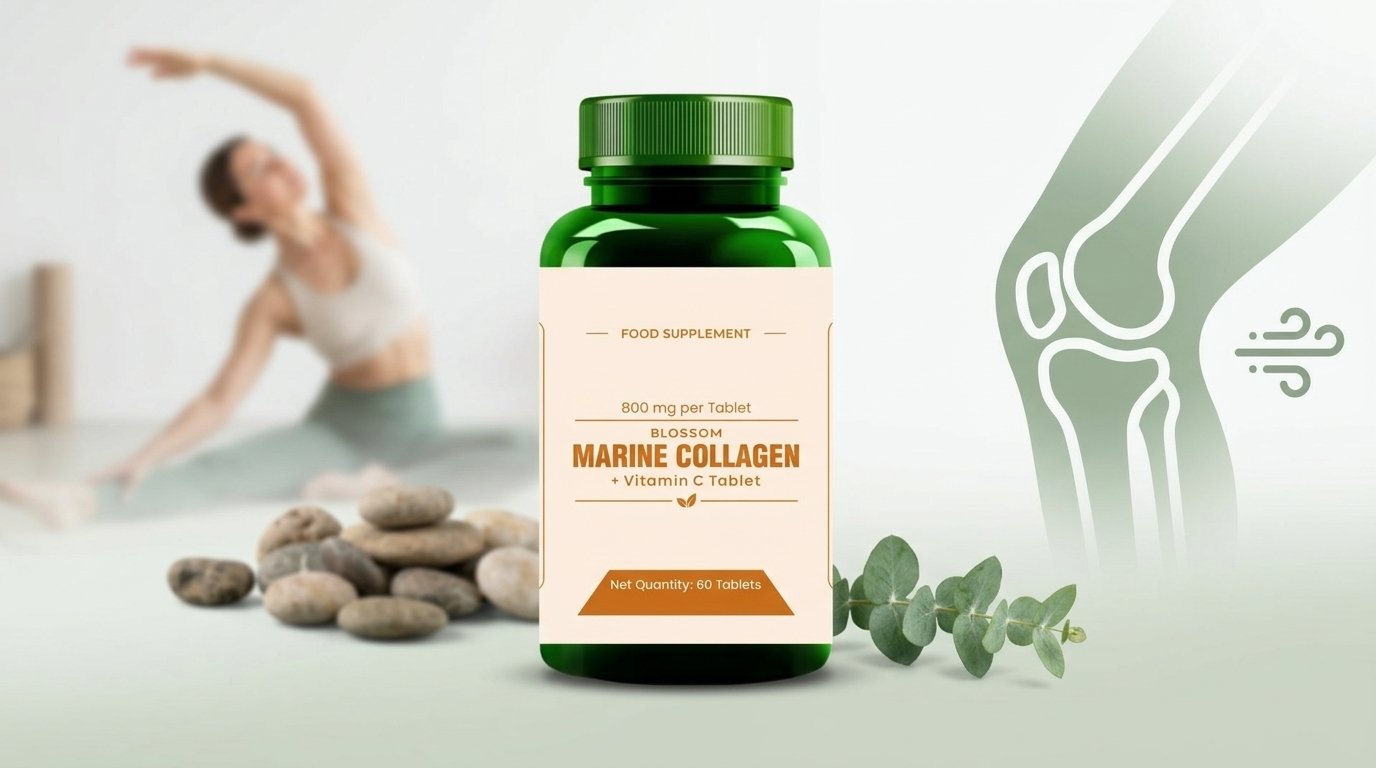
This is why high-quality supplements often combine these two ingredients. For instance, Blossom Marine Collagen offers a carefully formulated blend designed to support normal collagen formation and maintain active joints.
Key Nutritional Components for Joint Support
To better understand how these nutrients compare and interact, let’s look at a breakdown of their primary functions related to joint support.
| Nutrient | Primary Source | Key Function in Joint Support | Bioavailability |
|---|---|---|---|
| Marine Collagen | Fish skin and scales | Provides amino acids (proline, glycine) for structural maintenance of cartilage. | High (due to small peptide size) |
| Bovine Collagen | Cow hide and bones | Supports overall tissue structure; often contains Type I & III collagen. | Moderate to High |
| Vitamin C | Citrus fruits, berries, greens | Essential cofactor for normal collagen formation and antioxidant protection. | High (water-soluble) |
| Hyaluronic Acid | Natural bodily fluid, supplements | Contributes to the lubrication of joints, supporting smooth movement. | Variable depending on molecular weight |
Incorporating Marine Collagen into Your Daily Routine
Supporting your joints is a long-term commitment that involves a holistic approach to health. Here are several ways to integrate the Marine Collagen benefits and Vitamin C into your lifestyle:
- Consistent Supplementation: Consistency is key. Incorporate a high-quality supplement like Blossom Marine Collagen into your daily routine, perhaps with your morning tea or smoothie.
- Vitamin C-Rich Diet: Ensure your diet includes plenty of natural Vitamin C sources, such as oranges, strawberries, bell peppers, and broccoli, to provide ongoing support for collagen synthesis.
- Regular, Low-Impact Exercise: Activities like swimming, cycling, and Pilates help maintain joint mobility without placing excessive stress on the cartilage.
- Adequate Hydration: Water is essential for maintaining the volume of synovial fluid, which lubricates the joints. Aim for at least 2 litres of water a day.
- Maintain a Healthy Weight: Carrying excess weight places additional strain on weight-bearing joints like the knees and hips. A balanced diet supports overall body composition and joint comfort.
Frequently Asked Questions (FAQs)
1. How long does it take to notice the benefits of marine collagen?
While individual experiences vary, many people begin to notice subtle differences in their skin hydration and joint comfort after 4 to 8 weeks of consistent daily use. Structural changes in the body take time, so patience and consistency are essential.
2. Is marine collagen suitable for vegetarians or vegans?
No, marine collagen is derived from fish, making it unsuitable for vegetarians and vegans. However, there are plant-based supplements designed to support the body’s natural collagen production by providing amino acids and Vitamin C, though they do not contain actual collagen.
3. Can I take marine collagen if I have a seafood allergy?
If you have a known allergy to fish or seafood, you should avoid marine collagen and consult with a healthcare professional for alternative ways to support your joint function, such as bovine collagen or purely plant-based structural support supplements.
4. Does marine collagen taste strongly of fish?
High-quality, hydrolysed marine collagen undergoes a rigorous filtration and purification process that typically removes the fishy odour and taste. Most premium supplements are virtually tasteless and can be easily mixed into water, juice, or hot beverages.
5. Why is Vitamin C included in collagen supplements?
Vitamin C is a vital cofactor in the synthesis of collagen. As recognised by the EFSA, Vitamin C contributes to normal collagen formation for the normal function of cartilage. Without it, the body cannot properly utilise the amino acids provided by the collagen supplement.
Conclusion
Maintaining active joints is a cornerstone of a vibrant, fulfilling lifestyle. As we have explored, the natural decline in our body’s collagen production does not mean we must accept decreased mobility as an inevitable fact of life. By understanding the Marine Collagen benefits and the crucial role of Vitamin C, we can make informed choices about our daily nutrition.
Marine collagen provides the highly bioavailable building blocks necessary for maintaining the structural integrity of our connective tissues. When paired with Vitamin C, which contributes to normal collagen formation and protects cells from oxidative stress, you create a supportive environment for your joints. Remember that supplements are intended to complement a balanced diet and a healthy lifestyle, not replace them.
If you are looking to support your active lifestyle and maintain normal joint function, considering a combined approach with high-quality nutrients may be a beneficial step forward. To explore a formulation designed with these principles in mind, discover the benefits of Blossom Marine Collagen today.
References for further reading: